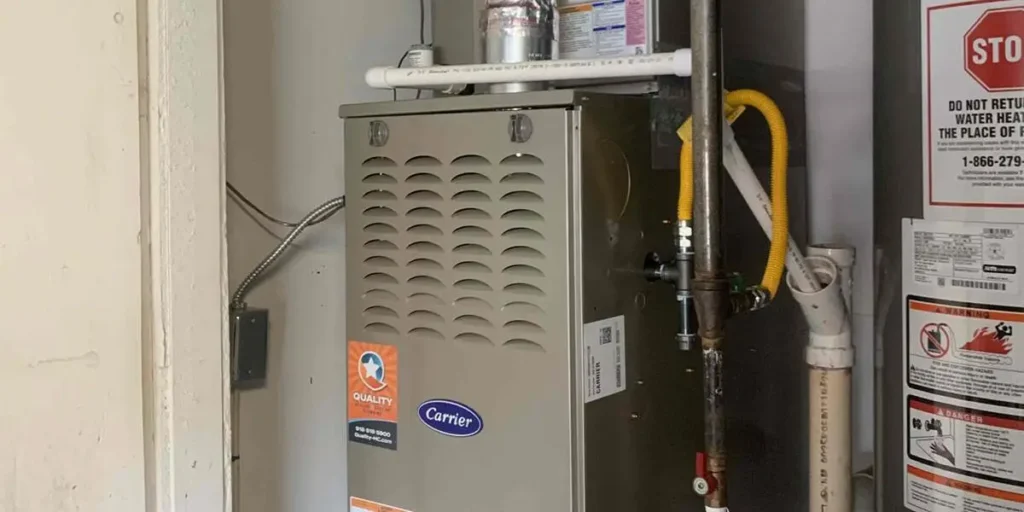
If your furnace stops heating or starts blowing cold air, one of the first things to look at on an older gas furnace is the pilot light. A pilot that’s out, weak, or burning the wrong color can keep your system from working properly and may even be unsafe.
In this guide, you’ll learn how to check your furnace pilot light safely, what a healthy flame should look like, and when it’s time to call a licensed HVAC technician instead of trying to fix it yourself.
⚠️ Important: If you smell gas, hear hissing, or feel unsafe at any point, turn off the furnace, leave the area, and contact your gas company or a professional right away. Do not try to relight the pilot.
Not all modern furnaces have a standing pilot light. Many newer models use electronic ignition instead.
Your furnace likely has a standing pilot light if:
It’s an older gas furnace (often 15+ years old).
You can see a small, continuous flame inside the burner compartment.
There are instructions on the furnace panel that mention “pilot,” “pilot light,” “pilot knob,” or “relight instructions.”
If you’re not sure, check:
The inside of the front panel for a lighting diagram.
The owner’s manual if you have it.
If your furnace uses electronic ignition (like a hot surface igniter or spark ignition), you won’t have a traditional standing pilot to check.
Before you open anything or get close to the furnace, take a few basic safety steps.
1. Turn the thermostat down or off
Set the thermostat to OFF or lower the temperature so the furnace doesn’t start while you’re inspecting it.
2. Make sure the area is well ventilated
Clear any clutter around the furnace.
Don’t store flammable items (paint, gasoline, boxes) near the unit.
3. Check for gas smells
If you notice a strong gas odor, do not try to check or relight the pilot.
Leave the area and call your gas company or a professional.
Most gas furnaces keep the pilot light inside the burner compartment.
Here’s how to find it:
Locate the access panel
Look for a removable metal door or panel on the front of the furnace, usually near the bottom.
Some panels simply pull off; others may have small screws or latches.
Remove the panel carefully
Gently pull the panel off and set it aside.
You should now see the burner area and, on older units, the pilot assembly.
Find the pilot assembly
It usually includes:
A small gas tube
A small burner tip where the pilot flame appears
A thermocouple or sensor near the flame
You may need a flashlight to see clearly inside the compartment.
Once you’ve found the pilot, look closely at the flame.
A healthy pilot light should be:
Blue or mostly blue
Steady, not flickering wildly
Strong enough to fully surround the tip of the thermocouple or sensor
Some pilot flames may have a small yellow tip, which can be normal. But large yellow or orange flames can indicate a problem.
No flame at all – the pilot is out.
Weak, tiny flame – may not be strong enough to keep the furnace running.
Yellow, orange, or flickering flame – could be a sign of dirt, poor combustion, or ventilation issues.
The flame doesn’t touch the thermocouple/sensor – the furnace may shut off the gas as a safety measure.
If the pilot is completely out or looks wrong, it’s time to decide whether to follow the manufacturer’s relight instructions or call a professional.
Before doing anything else, look for the instruction label on your furnace.
You’re looking for:
A diagram or steps labeled “Lighting Instructions”
Information about the pilot control knob with settings like OFF / PILOT / ON
On many older furnaces, you’ll see a gas control valve with a knob or dial. This controls the pilot and main burner gas flow.
Make note of:
What position the knob is currently in
Any warnings or safety instructions printed near it
If the knob is in OFF and the pilot is out, someone may have turned it off intentionally.
The question many homeowners have is:
“If the pilot is out, can I relight it myself?”
In many cases, older furnaces are designed to let you relight the pilot following the exact manufacturer instructions printed on the furnace. However, there are important safety rules:
You should NOT try to relight the pilot if:
You smell gas.
You see damaged equipment or loose connections.
You don’t feel fully comfortable doing it.
The pilot keeps going out repeatedly.
If you do choose to relight it, carefully follow the step-by-step instructions on the furnace label. Never guess or improvise with gas appliances.
If the pilot won’t stay lit, goes out again, or the flame looks wrong after relighting, turn the gas control back to OFF and call a licensed HVAC technician.
Checking the pilot light visually is usually safe as long as you’re careful. But many issues related to the pilot are better handled by a pro, especially when gas safety is involved.
You should call a professional if:
The pilot won’t stay lit.
The pilot flame is yellow, orange, or very weak.
You smell gas around the furnace.
The furnace still won’t run, even with a steady pilot.
The pilot goes out frequently.
A licensed technician can:
Clean the pilot assembly and burner
Check and, if needed, replace the thermocouple or flame sensor
Inspect the gas valve, ignition system, and venting
Make sure the furnace is operating safely and efficiently
How do I know if my furnace has a pilot light?
Older gas furnaces often have a standing pilot flame. If you see lighting instructions mentioning “pilot” and a small flame diagram inside the front panel, you probably have one. Newer furnaces often use electronic ignition instead.
What color should my furnace pilot light be?
A healthy pilot flame should be mostly blue and steady. A large yellow or orange flame can indicate combustion or ventilation problems and should be checked by a professional.
Is it safe to relight my furnace pilot light myself?
It can be safe if you carefully follow the manufacturer’s instructions on the furnace, and there is no gas smell. If you’re unsure or uncomfortable, or the pilot won’t stay lit, it’s best to call a professional.
Why does my pilot light keep going out?
Common reasons include a dirty pilot orifice, a faulty thermocouple, weak gas flow, or issues with the gas valve or draft. A technician can diagnose the exact cause and fix it safely.
Checking your furnace pilot light is often a simple visual inspection:
find the burner area, locate the pilot, and look at the flame.
But when it comes to gas, flame, and safety controls, it’s always better to be cautious. If something doesn’t look right, the pilot won’t stay on, or you’re not 100% sure what you’re doing, call a qualified HVAC technician.
You’ll get:
A safe inspection of your furnace
Proper cleaning and adjustment of the pilot
Peace of mind that your heating system is running safely and efficiently
Need help with your furnace pilot light? Schedule a service visit today and we’ll make sure your system is safe, properly lit, and ready for cold weather.